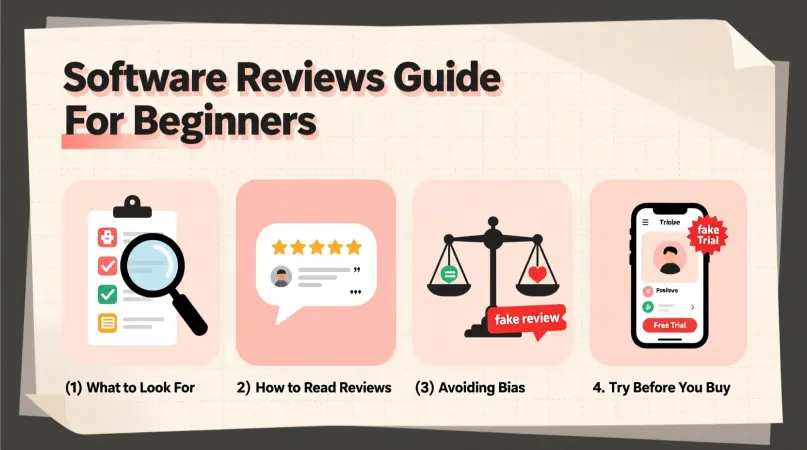

Introduction
Software reviews play a very important role in today’s digital world. Almost everyone uses software in daily life, whether it is for work, study, business, or personal tasks. From mobile apps to desktop programs and cloud tools, software is everywhere. Because there are so many options available, choosing the right one can be confusing. This is where software reviews become helpful and valuable.
Software reviews are written opinions and evaluations of software products. They explain how a tool works, what features it offers, and whether it is worth using. For beginners, software reviews provide clear guidance and reduce the risk of choosing the wrong product. For intermediate users, reviews help compare tools and make smarter decisions.
In simple words, software reviews save time, money, and effort. Instead of testing dozens of tools yourself, you can learn from the experiences of others. A good review explains both positive and negative points in an honest way. It does not promote blindly, and it does not hide problems.
In this complete guide, you will learn everything about software reviews. You will understand what software reviews are, why they matter, and how to read or write them properly. This guide is written in simple English, using clear examples and easy steps. Whether you want to read better software reviews or create your own, this article will help you build confidence and knowledge.
What is Software Reviews?
Software reviews are detailed evaluations of software products written by users, experts, or reviewers. These reviews describe how software works in real situations. They focus on features, usability, performance, pricing, and overall value.
A software review usually answers common questions. It explains what the software does, who should use it, and what problems it solves. It also highlights strengths and weaknesses so readers can decide if the tool fits their needs.
Software reviews can be short or long. Some are quick opinions, while others are in depth guides. The best software reviews are honest, clear, and easy to understand. They are based on real usage, not guesses.
In many cases, software reviews include comparisons. They compare similar tools and show differences. This helps users pick the best option without confusion. For beginners, software reviews act like a friendly advisor.
Why is Software Reviews Important?
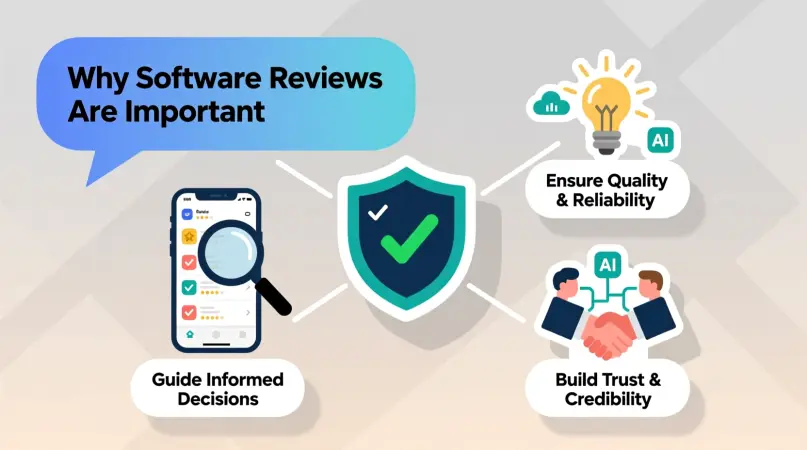
Software reviews are important because they help people make informed decisions. Without reviews, users may waste money on tools that do not meet their needs.
One major reason software reviews matter is trust. People trust real experiences more than advertisements. Reviews provide insights that marketing pages often hide. They talk about bugs, limitations, and real performance.
Another reason is time saving. Testing software takes time. Software reviews shorten the research process. You can quickly learn if a tool is worth trying.
Software reviews also support learning. Beginners can understand technical tools easily through simple explanations. Intermediate users can explore advanced features through detailed reviews.
In short, software reviews reduce risk, increase confidence, and improve decision making for everyone.
Detailed Step-by-Step Guide
Step 1: Identify Your Purpose
Before reading or writing software reviews, know your goal. Are you looking for software for business, education, or personal use? Clear goals help you focus on relevant information.
Step 2: Understand Software Features
Read software reviews that explain features clearly. Look for reviews that describe what each feature does and how it helps users.
Step 3: Check Usability and Interface
Good software reviews talk about ease of use. They explain whether beginners can use the software without confusion.
Step 4: Analyze Performance and Speed
Performance matters. Software reviews should mention speed, stability, and reliability during regular use.
Step 5: Review Pricing and Value
Pricing is important. Software reviews compare free and paid plans and explain what value you get for your money.
Step 6: Read Pros and Cons Carefully
Balanced software reviews list both advantages and disadvantages. This helps you see the full picture.
Step 7: Look for Real Use Cases
The best software reviews include real examples. These show how software works in practical situations.
Step 8: Compare Multiple Reviews
Do not rely on one review only. Reading several software reviews gives you a more accurate understanding.
Benefits of Software Reviews
- Help users make confident decisions
- Save time during software selection
- Reduce risk of wasting money
- Provide honest user experiences
- Explain features in simple language
- Compare similar software tools
- Support beginners and intermediate users
Disadvantages / Risks
- Some software reviews may be biased
- Fake reviews can mislead readers
- Outdated reviews may share wrong information
- Overly technical reviews confuse beginners
- Sponsored reviews may hide flaws
Common Mistakes to Avoid
Many people make mistakes when reading software reviews. One common mistake is trusting only positive reviews. Always look for balanced opinions.
Another mistake is ignoring the review date. Software changes over time. Old software reviews may not reflect current features.
Some users also skip reading negative points. Disadvantages are important because they show limitations.
Avoid choosing software based on one review only. Multiple software reviews provide better insight.
Finally, do not ignore your own needs. A tool may have great reviews but still not suit your purpose.
FAQs
What are software reviews used for?
Software reviews are used to understand how a software product works, its features, and whether it is suitable for specific needs. They help users make informed decisions.
Are software reviews reliable?
Most software reviews are reliable when written honestly. However, it is best to read multiple reviews to avoid bias or misinformation.
Who writes software reviews?
Software reviews are written by users, experts, bloggers, and professionals who have tested the software.
Can beginners understand software reviews?
Yes, many software reviews are written in simple language. Beginner friendly reviews explain technical terms clearly.
How long should software reviews be?
There is no fixed length. Good software reviews focus on clarity, honesty, and useful details rather than word count.
Should I trust free software reviews?
Free software reviews can be helpful, but always check if the review is sponsored. Honest reviews clearly mention both pros and cons.
Expert Tips & Bonus Points
Always check the reviewer’s experience level. Experienced reviewers provide deeper insights.
Focus on reviews that include screenshots or examples, as they show real usage.
Look for updates in software reviews. Updated content reflects current software versions.
When writing software reviews, be honest and clear. Avoid exaggeration and keep language simple.
Use structured headings and bullet points to improve readability.
Remember that good software reviews help others, not just promote products.
Conclusion
Software reviews are an essential part of modern decision making. In a world filled with countless digital tools, choosing the right software can feel overwhelming. Software reviews simplify this process by sharing real experiences, honest opinions, and practical insights. They help beginners avoid confusion and support intermediate users in making smarter choices.
A good software review explains features clearly, highlights benefits, and openly discusses limitations. It saves time and reduces risk by guiding users toward suitable tools. When used correctly, software reviews act as a trusted guide in the digital marketplace.
However, readers must stay careful. Not all software reviews are equal. Some may be biased or outdated. Reading multiple reviews, checking dates, and focusing on balanced opinions can improve accuracy.